

By now, you’ve learned why innovation matters, how millionaires think, and how to train your brain to see opportunities.
But here’s the truth most creators miss:
Innovation without a model is a spark without fuel.
Millionaires don’t just have ideas – they have innovation models that turn those ideas into repeatable wealth engines.
Today, you’ll learn 7 proven frameworks the world’s top entrepreneurs, creators, and investors use to scale innovation – and how you can apply them step by step.
Each model isn’t theory. It’s tested in the field – by people who built empires from scratch.
Let’s dive in.
Model 1: The Platform Model — Build Value, Then Monetize the Network
Concept:
Create a platform that connects two groups – users and providers – and capture value in between.
Examples:
- Airbnb: Connects hosts & travelers
- Uber: Connects drivers & riders
- YouTube: Connects creators & viewers
- Binance: Connects traders & crypto assets
Millionaires like Brian Chesky (Airbnb) and Changpeng Zhao (Binance) built billion-dollar platforms without owning inventory.
“Own the system, not the supply.” — Millionaire Script Principle
How to Copy It:
- Identify a fragmented market with supply & demand imbalance.
- Build a simple platform (even an MVP) to connect both sides.
- Offer convenience, trust, and speed.
- Monetize through fees, subscriptions, or value-added services.
Pro Tip:
Start niche. Uber began with luxury black cars. Airbnb began with air mattresses.
Millionaire Takeaway:
Platforms scale exponentially – once trust and network effects kick in, wealth compounds automatically.
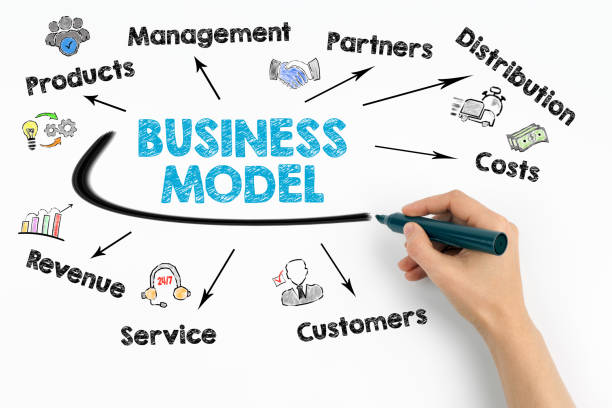
Model 2: The Product Innovation Model — Create Unique Value People Crave
Concept:
Solve one painful problem better than anyone else – and brand it beautifully.
Examples:
- Dyson: Reinvented vacuum cleaners with tech + design
- Spanx: Reinvented undergarments for women
- Tesla: Reimagined electric cars as luxury statements
Sara Blakely turned $5,000 and an idea into a $1 billion brand – by innovating on comfort and confidence, not complexity.
“Simple innovations solve deep pains.”
How to Copy It:
- Spot a daily frustration (start with your own life).
- Ask: Can I make it faster, cheaper, easier, or more beautiful?
- Prototype – even on paper.
- Test with small groups.
- Build a compelling story around your product.
Pro Tip:
People don’t buy products. They buy relief, status, or identity.
Millionaire Takeaway:
You don’t need 100 inventions. You need one iconic product that becomes your signature innovation.
Model 3: The Subscription Model — Turn One Sale Into Lifelong Revenue
Concept:
Sell once, earn forever.
Instead of chasing customers repeatedly, create a recurring value loop where users pay monthly or annually.
Examples:
- Netflix / Disney+ — Streaming subscriptions
- Adobe / Canva — Creative tools
- HubSpot / Notion — Software-as-a-Service (SaaS)
- Gym Memberships / Coaching Plans — Real-world services
Why It Works:
Predictable cash flow, higher customer lifetime value, and scalability.
“Wealth loves consistency.” — Millionaire Script Principle
How to Copy It:
- Identify a service or value people use repeatedly.
- Offer access, not ownership (e.g., “watch,” “use,” “learn”).
- Layer tiers: free, pro, premium.
- Automate retention (emails, updates, rewards).
Example:
Netflix started mailing DVDs → saw a pattern → built streaming → added subscriptions → built global dominance.
Millionaire Takeaway:
Subscriptions build compounding wealth. Every new customer adds to yesterday’s revenue.
Model 4: The Community Model — Monetize Belonging
Concept:
People crave connection more than products. Build a tribe around transformation and watch it grow.
Examples:
- Y Combinator — startup founder network
- Morning Brew — community media
- Iman Gadzhi’s GYB / Agency Network — monetized community learning
- Reddit / Discord / Patreon Creators — tribes with purpose
“In the attention era, community is currency.”
How to Copy It:
- Identify a shared mission or identity.
- Create a private space (Discord, Circle, Slack, Telegram).
- Deliver ongoing value: resources, mentorship, insights.
- Monetize through memberships, courses, or premium access.
Pro Tip:
Focus on transformation – help members become someone new.
Millionaire Takeaway:
Communities become ecosystems. Once you lead one, opportunities (partnerships, deals, brand collabs) follow you.
Model 5: The Licensing Model — Let Others Sell Your Genius
Concept:
Create intellectual property (IP), then license it to others for royalties or usage fees.
Examples:
- Disney licenses characters & brands.
- Coca-Cola licenses its brand to manufacturers.
- McDonald’s franchises its systems globally.
- Authors, Creators, Course Builders license their frameworks.
“License once. Earn forever.”
How to Copy It:
- Create something replicable: system, content, brand, or method.
- Protect it legally (IP, trademark, copyright).
- Find partners who want to use it.
- Charge royalties or flat fees.
Example:
McDonald’s scaled by franchising its operating system, not just burgers. Ray Kroc sold a system – that’s innovation models.
Millionaire Takeaway:
Owning IP = passive leverage. You innovate once and get paid repeatedly.
Model 6: The Aggregator Model — Organize Chaos, Capture Value
Concept:
When markets are fragmented, the winner is the one who aggregates choice and builds trust.
Examples:
- Amazon — Aggregated sellers & products
- Google — Aggregated web information
- TripAdvisor — Aggregated travel reviews
- CoinMarketCap — Aggregated crypto data
“Order creates opportunity.”
How to Copy It:
- Spot a chaotic industry with scattered sources.
- Build one interface that centralizes value.
- Optimize for search, UX, and authority.
- Monetize via ads, affiliates, or premium listings.
Example:
Amazon didn’t make everything. It organized everything.
Millionaire Takeaway:
If you can make decision-making easier, you can own entire ecosystems.
Model 7: The Ecosystem Model — Build Your Own Economy
Concept:
Create interconnected products/services that reinforce each other, locking users in with value loops.
Examples:
- Apple: iPhone → iCloud → Mac → App Store
- Google: Search → Gmail → Docs → YouTube
- Binance: Exchange → Wallet → Chain → Academy → Launchpad
- Derby X Limited: Tech → Fintech → Crypto → Streaming
“Control the ecosystem, control the economy.”
How to Copy It:
- Start with one killer product.
- Build complementary products that solve adjacent problems.
- Create seamless integration.
- Offer loyalty or token incentives for staying inside.
Example:
Apple’s innovation wasn’t the iPhone – it was the ecosystem that turned every user into a lifetime customer.
Millionaire Takeaway:
The ecosystem model transforms innovation models into an empire. Once users enter your world, they rarely leave.
Bonus: Combine Models for Exponential Power
The wealthiest innovators don’t pick one model – they stack them.
Example — Elon Musk:
- Product Innovation: Tesla cars
- Platform Model: Supercharger network
- Ecosystem Model: SolarCity + Powerwall + EVs
- Subscription: FSD (Full Self Driving) updates
Example — Netflix:
- Product Innovation: Streaming tech
- Subscription Model: Monthly revenue
- Ecosystem Model: Original content, app, data loop
Stacking creates compounding innovation – each system feeds another.
How to Choose Your Model
Ask yourself:
- What’s my superpower?
(Creativity, systems, storytelling, tech, leadership?) - What market do I understand deeply?
- What value can I deliver consistently?
- Do I want to serve users, build products, or empower partners?
Pick the model that fits your strength – then scale it with systems.
Real-World Case Study: Sara Blakely’s Innovation Stack
- Product Innovation: Spanx — new category
- Brand Ecosystem: Confidence + empowerment storytelling
- Licensing: Brand collabs (Target, Neiman Marcus)
- Community Model: Empowering women entrepreneurs
Result: Billion-dollar valuation without external funding.
Blakely didn’t just sell shapewear – she sold transformation, backed by innovative layers.
Innovation Worksheet: Build Your Model
| Step | Question | Your Notes |
|---|---|---|
| 1 | What’s the core problem you’re solving? | |
| 2 | Which innovation model best fits it? | |
| 3 | What’s your MVP or entry point? | |
| 4 | How will you monetize? | |
| 5 | How can you scale or layer models? |
Use this worksheet as your daily innovation map.
FAQ: Innovation Models
Q1: Which model is best for beginners?
Start with Product Innovation or Community Model. They require less capital and more creativity.
Q2: Can I combine models?
Absolutely. Stacking models accelerates scalability and resilience.
Q3: What if my idea doesn’t fit a model?
Refine it until it does. Every successful innovation maps to a model.
Q4: Do I need funding to build a platform or ecosystem?
Not initially. Start with an MVP, build traction, and attract partners or investors later.
Q5: How do I know when my model works?
When users return, revenue grows, and your system scales without you.
Final Thoughts: Innovation Loves Structure
Ideas are fragile without models.
Millionaires win because they don’t rely on luck – they rely on frameworks that multiply innovation.
You don’t need to reinvent the wheel.
You just need to choose the right wheel – and spin it relentlessly.
“Millionaires aren’t smarter. They’re system builders.”
So, ask yourself today:
What model will you master – and how will it build your empire?