
Musa Mustafa biography begins with a young entrepreneur who turned his video-clipping passion into a multi-million-dollar AI venture. Known also as Musa Crayo, he is one of the rising stars in the creator economy, combining deep algorithm insight with product building.
In this comprehensive profile, we’ll cover his full name, age, nationality, career path, net worth estimates for 2025, and dive deep into Crayo AI – its founders, business model, success stories, and FAQs.
< >Early Life & Personal Background
Full Name & Nationality
- The full name is simply Musa Mustafa (no widely reported middle name).
- According to Famous Birthdays, he is listed as born in Ireland.
- His origin is thus often associated with the UK/Ireland region.
Birth Year & Age
- His birth year is recorded as 2003 in publicly accessible sources
- That would make him about 22 years old (in 2025).
- Some interviews and videos mention him as “22-year-old entrepreneur” when discussing his businesses.
Due to limited personal disclosure, details like his hometown, family background, or schooling are not confirmed in reliable sources, and he maintains a degree of privacy around personal life.
Rise to Influence: From Clip Editor to AI Founder
The Early Hustle: Clipping & Video Editing
Musa’s journey into entrepreneurship began quite early. He built a reputation for his ability to clip content – especially from podcasts, streams, and influencer content – and turn it into highly shareable short-form video content.
- He reportedly worked with creators like Sneako, clipping their streams and podcasts.
- In one story, he describes an initial client contract with Sneako paying $3,000/month to create clips.
- His skill in packaging content for virality allowed him to grow both his service business and his personal brand.
By mastering what makes clips go viral – hooks, retention, pacing – he turned content clipping from a side hustle into a scalable agency model.
Building Personal Brand & Audience
While doing client work behind the scenes, Musa gradually built his own social presence:
- He grew to hundreds of thousands of followers on Instagram under the handle @mussy.02.
- He started releasing content about his earnings, behind-the-scenes tactics, and AI tools to attract aspiring creators.
- He also founded a learning community called Media Metas, where creators and editors exchange viral strategies.
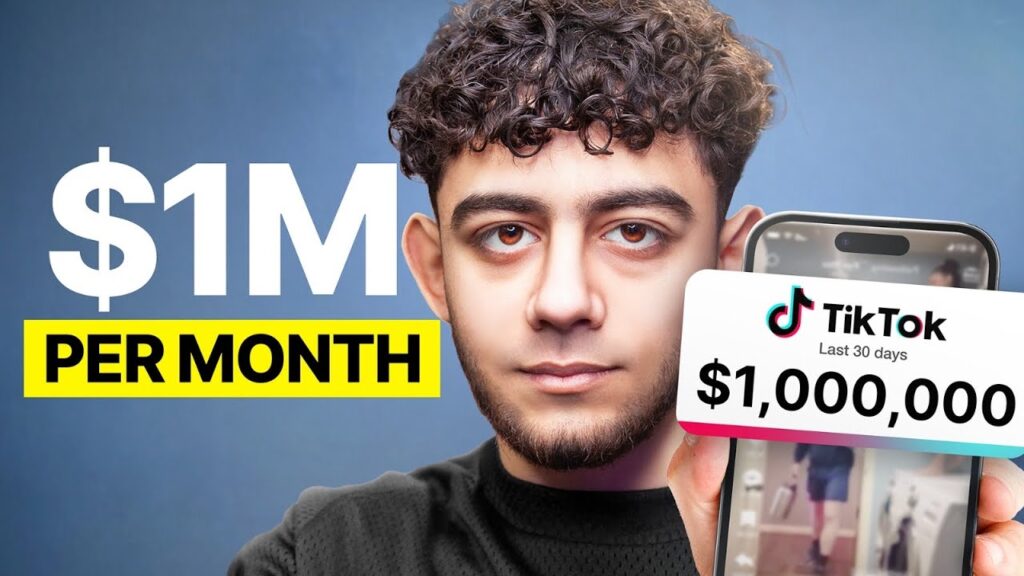
His content earned broad attention, especially videos titled “How this 22-year-old makes $1M a month” or “$400k/mo making TikTok clips.”
That audience and credibility laid the foundation for launching his own product.
Net Worth 2025 (Estimated)
Estimating net worth for a young, privately held startup founder involves uncertainties, but we can make informed speculations based on revenue reports, valuations, and public commentary.
Revenue & Business Performance
- Startup Spells reports that Crayo AI generates $300,000 to $500,000 per month in revenue. S
- According to Venture Radar, the AI SaaS built by the team hit $600,000/month in revenue and is described as a $7 million business in valuation context.
- On Remotion’s success-stories page, Crayo is listed as generating $6 million/year via video story tools.
- Another source says Crayo hit half a million dollars per month revenue.
- Some commentary mentions that it went from $0 to $300,000/month within six months.
Given those revenue figures, if we assume strong margins and that Musa holds meaningful equity in Crayo, his shares and earnings could place his net worth in the low tens of millions USD range – perhaps $10M to $25M+ as of 2025.
Also, considering content income, brand deals, consulting, and secondary ventures, his total net worth could reasonably be in the $15 million to $30 million corridor.
So, a conservative estimate:
Estimated Net Worth 2025: ~ $20 million USD
If Crayo achieves further scale or raises investment, that figure could increase significantly.
< >Musa Crayo: The Brand & Persona
Because he is so closely tied to his product, Musa is often referred to in shorthand as Musa Crayo (i.e. Musa + Crayo AI). That alias works as both brand recognition and shorthand identification in creator / AI circles.
When people search “Musa Crayo,” they’re usually looking for the founder of Crayo AI, his story, or how to mimic his success in clipping and AI tools.
Throughout this article, you’ll see references to him as both Musa Mustafa and Musa Crayo interchangeably, depending on context.
READ ALSO: Tyler Vitelli Biography & Net Worth In 2025
Crayo AI: Who Owns It, What It Does, & Business Model
Founders & Ownership
- Musa Mustafa is publicly declared as Co-Founder, Crayo.
- The platform’s page mentions both Musa Mustafa and Daniel Bitton as founders.
- Therefore, primary ownership is likely shared between the two, with Musa maintaining a significant equity stake given his promoter role and brand leverage.
- It’s not publicly disclosed whether external investors hold stakes or what funding rounds have taken place (if any).
What Is Crayo AI?
Crayo AI is a creator tool that automates the process of turning scripts, transcripts, or audio into short-form video content with voiceovers, captions, B-roll, and template styling – all in seconds.
Key capabilities:
- Automated voiceovers & narration
- Captions, subtitles, and text overlays
- B-roll and template visuals selection
- Formats for Reddit story videos, split-screen, fake text-chat videos, and more
- No advanced video editing skills required – optimized for creators who focus on content, not editing.
Its website states: “Crayo is the tool I wish I had when I started. … After running channels with over 1 million subscribers, I built Crayo to solve my scaling problems.”
Business & Monetization Model
Crayo AI’s monetization and growth model includes:
- SaaS subscription
Users pay monthly or annually for access to the platform’s tools, templates, and export capabilities. - Usage-based pricing / tiering
Higher tiers unlock more exports, voice options, premium B-roll, custom branding, etc. - Affiliate/referral / creator promotion
Because Musa is an influencer in the creator space, referrals from his audience funnel users into Crayo. - Scaling via virality and user-generated content
Users’ success stories act as marketing – when creators grow using Crayo, they amplify its reach. - Upsells & education courses
Offering training, content strategies, or plugins as add-ons or higher-tier features.
Because Crayo is built for virality and content velocity, its growth leverages network effects: more creators using it means more exposure to potential users.
Valuation Context & Growth
Given reported revenues of $300,000+ per month and $6M/year, a SaaS multiple (e.g., 4× to 10× revenue) would place Crayo’s valuation between $24 million and $60 million USD, depending on growth and profit margins. The reported “$7M business” label reflects a conservative or earlier stage estimate.
In one podcast, it’s claimed Musa built a “$30M AI SaaS in 4 months,” which may refer to pipeline or valuation rather than actual earnings.
Thus, the quoted valuation range seems plausible, and audiences evaluating Musa’s net worth typically factor in his equity in Crayo.
< >Career Highlights & Milestones
Below is a summary of major milestones in Musa Mustafa’s career and the rise of Crayo AI.
| Year / Age | Milestone / Event |
|---|---|
| ~13 years old | Began making home videos, experimenting with editing and content creation. |
| Teen years | Offered paid editing and clip services to small clients; studied algorithmic viral mechanics. |
| Mid-teens | Sent cold outreach to big creators; landed Sneako via an Omegle introduction. |
| Early 20s | Built service business clipping content; revenue reportedly reached $100,000+ per month. |
| 2023 | Began promoting theory and systems publicly, growing audience and reputation. |
| 2024 | Launched or scaled Crayo AI with Daniel Bitton; reports of first $300k+/month in revenue. |
| 2024–2025 | Crayo reaches $6M/year in revenue (per Remotion) and continues expanding features. |
| 2025 (projected) | Musa’s net worth potentially touches $20M+ with expansion, equity growth, and side incomes. (estimated) |
Throughout, Musa has combined product engineering, creator mindset, and algorithmic insight to position himself as both a thought leader and an operator.
Success Stories & Impact
Client Wins & Content Virality
Musa has publicized multiple success stories:
- Snippets show Musa receiving contract payments and “proof of earnings” in the first few seconds of promotional videos.
- He reportedly delivered explosive follower growth to clients via his clipping strategies.
- Some content claims he facilitated millions of extra views and follower growth for creators across YouTube, TikTok, and Instagram.
These stories serve as social proof that attract new users to Crayo.
Scale & User Base
- Crayo is said to have over 2 million users according to Remotion’s success stories.
- Because the product is viral by design, many users are creators who then become promoters, creating a reinforcing loop.
- The tool is also used for “faceless virality,” enabling creators who prefer not to show faces or speak on camera to still generate content.
Industry Recognition & Media Exposure
- Musa has been featured in interviews, podcasts, and videos analyzing the looming creator economy wave.
- Some journalists have critiqued the ethics of mass AI-clip methods, situating him in debates about content reuse and algorithm abuse.
His prominence within the creator + AI intersection gives him strategic influence beyond mere revenue.
Challenges, Criticisms & Risks
No profile is complete without acknowledging counterpoints and risks Musa and Crayo face:
- Content reuse / copyright issues
Some media outlets note concerns about how AI clipping tools may reuse others’ content without permission, blurring lines of fair use. - Market saturation & competition
The space of AI video tools (Synthesia, Pictory, Veed, etc.) is crowded; Crayo must continue innovating to stay ahead. - Profit margins & scaling operations
As usage grows, infrastructure and support costs rise. Maintaining high gross margins is key. - Reliance on founder brand
Much of Crayo’s early marketing hinged on Musa’s personal brand. If that influence wanes, growth could slow. - Regulatory & platform policy risks
Platforms (YouTube, TikTok, Instagram) could change policies on AI-generated content, clipping, or reused media, affecting user adoption.
He must navigate these risks while scaling responsibly.
< >FAQ — Musa Mustafa & Crayo AI
Q1: What is Musa Mustafa’s age?
He was born in 2003, making him approximately 22 years old in 2025.
Q2: What is Musa Mustafa’s nationality?
He is associated with Ireland / UK region according to his publicly listed birthplace.
Q3: Who owns Crayo AI?
Crayo is co-founded by Musa Mustafa and Daniel Bitton. Musa likely retains significant equity, given his branding role.
Q4: What does Crayo AI do?
Crayo automates the creation of short-form videos via AI – including voiceovers, subtitles, B-roll, templates, and rapid export – to turn scripts or clips into social content.
Q5: How much does Crayo AI make?
Reported revenue ranges from $300,000 to $600,000 per month.
Annualized, that equals $3.6 million to $7.2 million/year, aligning with some published success metrics.
Q6: What is Musa Mustafa’s estimated net worth in 2025?
Based on Crayo’s revenue and his equity, a reasoned estimate is $15M–$30M USD, with a central estimate near $20M.
Q7: What’s the growth outlook for Crayo AI?
If Crayo continues expanding features, user base, and monetization tiers, valuation could scale into $50M+ territory, potentially making Musa’s net worth much larger in coming years.
Final Thoughts
Musa Mustafa biography is a case study in how one person can merge creator marketing, viral systems knowledge, and product building to generate value. As Musa Crayo, he didn’t just ride the creator wave – he built the tool many creators now ride on.
In 2025, with an estimated net worth of ~$20 million, Crayo AI generating hundreds of thousands in monthly revenue, and a user base growing into the millions, Musa’s influence in AI + creator economy is well established – yet still early.
Future pivots, platform policies, and competition could reshape the landscape, but his trajectory shows how combining insight, personal brand, and product mindset can create outsized impact.