

If you’re wondering how do self-made millionaires become wealthy, you’re in the right place.
In this comprehensive guide we explore the journeys of self-made millionaires/billionaires, each of whom started with almost nothing-and yet rose to extraordinary success.
You’ll see the mindset shifts, strategic moves, and hard lessons they learned. Read on to get inspired and to draw your own blueprint.
1. Sara Blakely: From $5,000 Savings to Billion-Dollar Brand
Sara Blakely is a textbook example of self-made millionaires who began with next to nothing. She worked as a fax machine salesperson, had no fashion background, and started her company with just $5,000 of her own savings.
Her breakthrough came when she cut the feet off pantyhose and launched Spanx, solving a real problem for women.
Key lessons:
- Use what you have and solve a real pain point.
- Be willing to learn on the fly (she taught herself hosiery manufacturing and retail).
- Retain control and ownership-she didn’t take outside investment early on.
Her journey exemplifies how “self-made millionaires” build grit, creativity and perseverance.
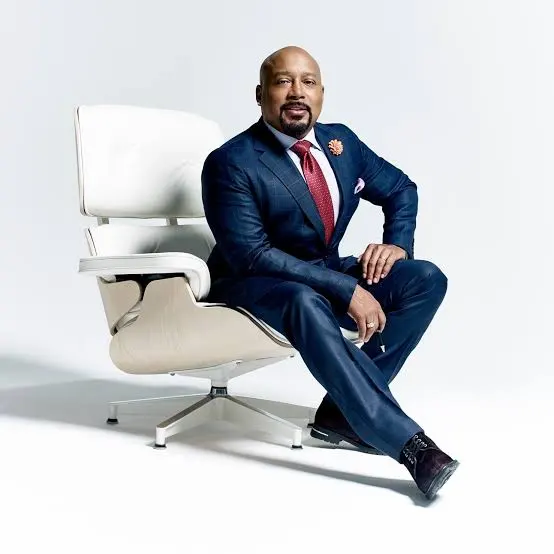
2. Daymond John: Street-Corner Hats to Global Fashion Empire
Daymond John grew up in Queens, New York, selling inexpensive hats on street corners before founding FUBU (“For Us By Us”). He turned a small idea into a brand with hundreds of millions in revenue within a few years.
Key lessons:
- Start small and test quickly – he literally sold hats for $10 and learnt from the street.
- Branding matters: he built a brand identity that resonated with culture and community.
- Be ready to invest (his mom mortgaged her house to help him).
Daymond’s story underscores how many self-made millionaires leverage culture + hustle + sharp business sense.
3. Jack Ma: From English Teacher to Alibaba Billionaire
Jack Ma, founder of Alibaba, is often cited among those who went from humble beginnings to massive wealth. Even after repeated rejections-he tried ten times to get into Harvard-he persevered.
Key lessons:
- Rejection isn’t failure-it’s feedback.
- Leverage the internet or under-served markets.
- Build for scale: Alibaba did not just sell locally, it scaled globally.
Jack’s story reminds us that self-made millionaires often treat failure as a stepping stone, not a stop sign.
4. Oprah Winfrey: From Poverty to Media Mogul
Oprah Winfrey’s rise from a childhood in poverty and adversity to become a billionaire media mogul is one of the most iconic “rags-to-riches” stories.
Key lessons:
- Authentic storytelling wins: Oprah built her brand by being genuine.
- Diversify your brand: from talk show to magazine to network.
- Invest in yourself – her early work built her platform and reputation.
She shows how a personal brand, when leveraged correctly, can elevate someone into the club of self-made millionaires.
5. Brian Wong: Tech Prodigy to Young Millionaire
Brian Wong founded Kiip and became a self-made millionaire by age 20.
Key lessons:
- Youth and innovation can be a powerful combo.
- Identify emerging trends (mobile advertising/gaming rewards in his case).
- Execute quickly and scale.
His story illustrates that even at a young age, one can join the ranks of self-made millionaires by being ahead of the curve and executing fast.
6. Kalpana Saroj: From Caste Oppression to Indian Industrialist
Kalpana Saroj, born into poverty and caste-discrimination in India, became a successful entrepreneur and millionaire by buying a distressed company and turning it around.
Key lessons:
- Opportunity often appears in crisis-she acquired distressed assets.
- Leverage grit: she overcame systemic barriers.
- Reinvestment in the business and focus on transformation.
Her journey reinforces that being a self-made millionaire often means rising from substantial adversity and forging one’s own path.
7. Malkit Chand: Tailor to Millionaire Exporter
Malkit Chand started his career as a tailor in Ludhiana, India and built a successful T-shirt manufacturing and export business from the ground up.
Key lessons:
- Start with what you know and evolve.
- Exporting and globalizing a modest business can yield big returns.
- Discipline, good people, strong patience.
This story shows that even local businesses can scale globally and join the ranks of self-made millionaires.
8. Madam C. J. Walker: America’s First Female Self-Made Millionaire
Madam C. J. Walker, born Sarah Breedlove, created a hair-care empire for African-American women and became one of the first documented female self-made millionaires in the US.
Key lessons:
- Identify underserved markets (hair-care for Black women in her case).
- Build a brand around mission + product.
- Give back – her philanthropy became part of her legacy.
Her story highlights how long before the digital age, self-made millionaires were born of insight, purpose and enterprise.
9. Oprah Winfrey – Wait, She’s Already Listed?
Okay – since Oprah is already covered in #4, let’s pick another outstanding case: Howard Schultz (former CEO of Starbucks) – though not all sources classify him strictly as “started from nothing,” his story is still instructive. He grew up in a Brooklyn housing project, worked at Starbucks when it was small, and helped build it into a global brand.
Key lessons:
- Purpose-driven growth (he aimed to serve community, build culture).
- Scale with quality, build customer experience.
- Expand with global mindset.
While not strictly “zero resources,” Schultz’s journey mirrors many lessons of self-made millionaires.

10. J.K. Rowling: From Welfare to Wizarding World
Although a bit different from typical business millionaires, J.K. Rowling went from being a single mother on welfare to a multimillionaire author via the Harry Potter phenomenon.
Key lessons:
- Creativity counts: her idea filled a gap in children’s fantasy literature.
- Perseverance: many publishers rejected her before acceptance.
- Monetize intellectual property, build brand, scale.
Her story is a reminder that self-made millionaires can come from many routes-business, art, creativity.
How These Self-Made Millionaires Did It: Common Threads
Across these ten stories, several recurring patterns emerge, if you’re studying how self-made millionaires become wealthy, here’s what you’ll find:
- Mindset of “starting with nothing” – They often began with little capital, few connections and massive ambition.
- Problem-solving & niche identification – Sara Blakely, Madam Walker, and others found unmet needs and filled them.
- Relentless execution and iteration – Daymond John, Brian Wong, Jack Ma all moved fast and learned on the job.
- Scaling up smartly – It’s one thing to make money, another to build a system, a brand, or a large business that sustains growth.
- Ownership and leverage – They didn’t just work-they built assets: brands, companies, IP.
- Resilience through adversity – Many faced strong obstacles (poverty, discrimination, rejections). What made them rise was refusing to quit.
- Reinvesting profits, building teams & systems – Once the idea proved out, they invested to scale.
- Authenticity & mission – Many aligned with something deeper than just money (community, culture, mission).
- Timing + trend-sense – Some leveraged emerging markets (mobile, internet, fashion culture).
- Giving back – Many acknowledge that part of success includes contribution to others.
How You Can Apply These Lessons
If you’re inspired by these stories of self-made millionaires and want to build your own trajectory, here’s a practical roadmap:
- Start with what you have. You don’t need massive capital upfront-many of these entrepreneurs started with a few thousand dollars or less.
- Find a real pain point in a market where people are underserved.
- Validate quickly with small bets: test your idea, sell to first customers.
- Keep costs low, iterate fast. You’ll make bad assumptions-find them early.
- Build for scale from day one. Ask: can this idea serve 10x or 100x customers?
- Protect ownership if possible-equity matters.
- Invest in yourself – learn skills, sharpen mindset, seek mentors.
- Be resilient. Expect failures and rejections-what sets self-made millionaires apart is persistence.
- Build a brand & mission. People buy from people, from brands they trust that represent values.
- Reinvest profits into growth, team, systems; don’t just take out.
- Use timing to your advantage. Be alert to trends, emerging tech, changing markets.
- Give back. Success feels richer when you lift others.
Final Thoughts
The journey of these 10 self-made millionaires shows that wealth isn’t reserved for the privileged alone. While starting conditions matter, what matters more is mindset, execution, resilience, and building assets.
If you ask how self-made millionaires become wealthy, the answer lies in selecting a compelling problem, acting relentlessly, scaling smartly and holding on long enough for compounding to work.
Use these lessons, adapt them to your own field, your own potential-and who knows, one day you might tell your story among the many of self-made millionaires/billionaires.