
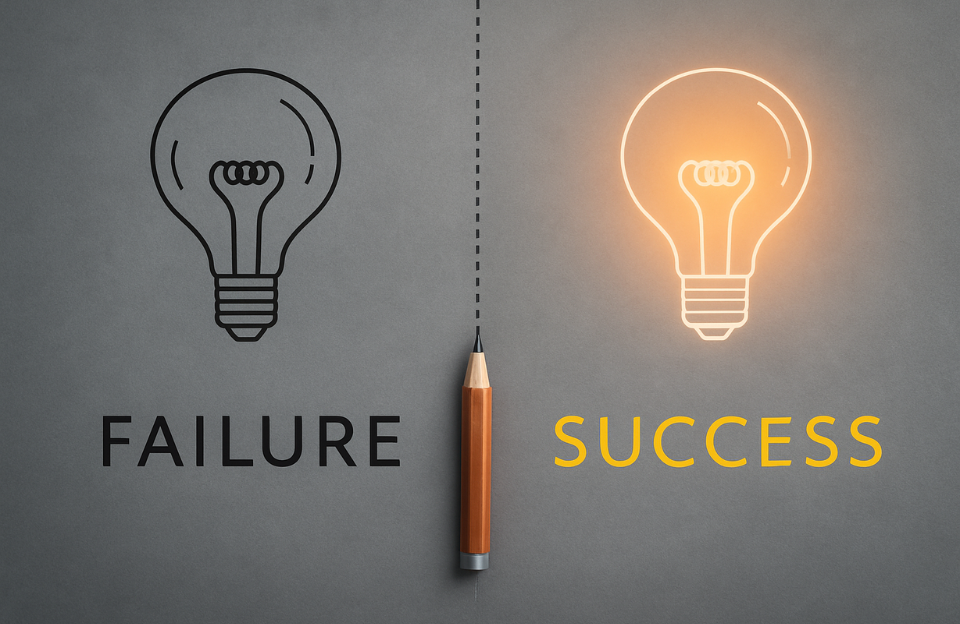
Failure fuels growth – and for modern startups, this isn’t motivational talk. It’s a strategic framework for survival and scale. In today’s unpredictable business environment, the founders who win are not the ones who avoid failure, but the ones who design systems that learn from it faster than everyone else. When failure fuels growth, mistakes become market intelligence, setbacks become pivots, and obstacles become competitive advantages.
If you are building a startup, this mindset could be the difference between stagnation and sustainable expansion.
Let’s break down how to turn this concept into a powerful, actionable startup strategy.
Why Startups Must Embrace the “Failure Fuels Growth” Mindset
Startups operate in uncertainty. You rarely have perfect information, guaranteed customers, or stable market conditions. Traditional corporate thinking – where failure is punished – kills innovation in early-stage companies.
Instead, high-performing startups treat failure as:
- A feedback system
- A validation filter
- A refinement tool
- A growth accelerator
When failure fuels growth, you stop chasing perfection and start chasing progress.
The question shifts from:
“How do we avoid mistakes?”
To:
“How quickly can we learn from this?”
That shift alone changes everything.

Top book recommended by the creator
🔥 Important Notice!
This book isn’t for sale – it’s our free gift to you from Millionaire Script, a token of love and appreciation for being part of our journey.
The Strategic Advantage of Failing Fast (and Smart)
Not all failure is useful. Reckless decisions without analysis are expensive. Strategic failure, however, is structured.
Here’s how successful startups use failure intelligently:
1. Rapid Experimentation
Winning startups test small before scaling big.
Instead of investing $100,000 into a full product launch, they:
- Build an MVP (Minimum Viable Product)
- Launch to a small audience
- Gather feedback
- Iterate quickly
If it fails? Good. That means you saved money and gained insight.
When failure fuels growth, experimentation becomes your research department.
2. Data-Driven Reflection
Failure only becomes growth when analyzed.
After every setback, ask:
- What assumption was wrong?
- Was the timing off?
- Did we misread customer demand?
- Was execution the issue?
Document lessons learned. Patterns will emerge.
Startups that systemize learning outperform startups that rely on emotion.
3. Building a Culture That Rewards Learning
Startup culture determines long-term survival.
If team members fear being blamed for mistakes, they will:
- Hide problems
- Avoid bold ideas
- Stop innovating
But when leadership reinforces that failure fuels growth, teams become:
- More creative
- More transparent
- More resilient
Founders set the tone. Share your own lessons openly. Normalize iteration.
Psychological safety fuels innovation.
Turning Failure Into Strategic Pivots
Some of the most successful companies in history started with ideas that didn’t work.
The key is knowing when to pivot.
A pivot is not quitting. It’s refining direction using better information.
Here’s how to pivot strategically:
- Identify repeated friction points.
- Analyze customer behavior, not just opinions.
- Adjust your value proposition.
- Re-test quickly.
- Double down on traction.
When failure fuels growth, a pivot becomes a power move – not a retreat.
Resilience: The Hidden Startup Superpower
Resilience is not about stubbornness. It’s about adaptive persistence.
Startups fail for many reasons:
- Poor cash flow management
- Weak product-market fit
- Lack of demand
- Internal misalignment
But resilient founders respond differently.
They:
- Adjust pricing models
- Reposition branding
- Explore new markets
- Refine messaging
- Rebuild teams strategically
The emotional stamina to continue after setbacks often separates enduring startups from short-lived ones.
Failure fuels growth when founders remain committed to evolution.

Noor Stars – Net Worth 2026, Biography & Real Story

Scarface Trades Net Worth 2026: Bio, Course & Real Name

Lailli Mirza Net Worth 2026, Biography & Full Background

Why 99% of People Never Get Rich (The Brutal Truth You’ve Never Heard)

Carina Hong Net Worth 2026: Biography & Axiom Math CEO

Palmer Luckey Net Worth 2026: Age, Bio & Billionaire Story
Practical Framework: How to Implement “Failure Fuels Growth” in Your Startup
Here is a tactical blueprint you can apply immediately:
Step 1: Create Controlled Experiments
Design short testing cycles (2–4 weeks).
Measure one clear objective per experiment.
Step 2: Track Metrics Religiously
Vanity metrics don’t count.
Focus on:
- Customer acquisition cost
- Retention rate
- Conversion rate
- Revenue per user
Step 3: Hold Monthly Learning Reviews
Instead of “performance reviews,” hold “learning reviews.”
Discuss:
- What failed
- What succeeded
- What to refine
Step 4: Reduce Emotional Attachment
Fall in love with solving problems, not with specific ideas.
Step 5: Reward Intelligent Risk
Celebrate team members who test bold ideas responsibly.
When failure fuels growth, learning becomes your competitive moat.
The Psychological Shift Every Founder Must Make
One of the biggest mindset transformations for entrepreneurs is understanding this truth:
Failure is not identity.
Failure is information.
Separating personal worth from business outcomes enables:
- Clearer decision-making
- Faster recovery
- Stronger leadership
Emotionally reactive founders struggle to pivot. Strategic founders analyze and adapt.
Learn More: The 7 Best Most Profitable AI Businesses to Start in 2026
Why Investors Respect Founders Who Have Failed
Interestingly, many investors see past failure as a positive signal.
Why?
Because founders who’ve failed before often:
- Understand risk management better
- Avoid repeating obvious mistakes
- Make more calculated decisions
- Build stronger systems
In this sense, failure fuels growth not only for the company – but for the founder’s leadership capacity.
Common Mistakes When Applying This Strategy
Be careful not to misunderstand the concept.
Failure fuels growth does NOT mean:
- Being careless
- Ignoring financial discipline
- Repeating the same mistakes
- Avoiding accountability
Growth only happens when learning happens.
Failure without reflection is simply loss.
Long-Term Impact: Sustainable Startup Growth
Startups that embed this philosophy early tend to:
- Adapt faster to market changes
- Maintain stronger team morale
- Build customer-centric products
- Innovate consistently
- Survive downturns
Markets evolve. Technology shifts. Consumer behavior changes.
Your ability to adapt determines longevity.
When failure fuels growth, your startup becomes antifragile – stronger under pressure.
Final Thoughts: Redefine Failure to Redefine Success
Failure fuels growth is not a motivational slogan, but it is a startup operating system.
The founders who succeed long term are not those who avoid mistakes. They are those who design businesses that extract maximum insight from every setback.
If you are building a startup today, ask yourself:
Are you avoiding failure or engineering growth through it?
Because in entrepreneurship, the real risk isn’t failing.
The real risk is refusing to learn.
Noor Stars – Net Worth 2026, Biography & Real Story
Scarface Trades Net Worth 2026: Bio, Course & Real Name
Lailli Mirza Net Worth 2026, Biography & Full Background
Why 99% of People Never Get Rich (The Brutal Truth You’ve Never Heard)
Carina Hong Net Worth 2026: Biography & Axiom Math CEO